Understanding Daniel's Prophecy:

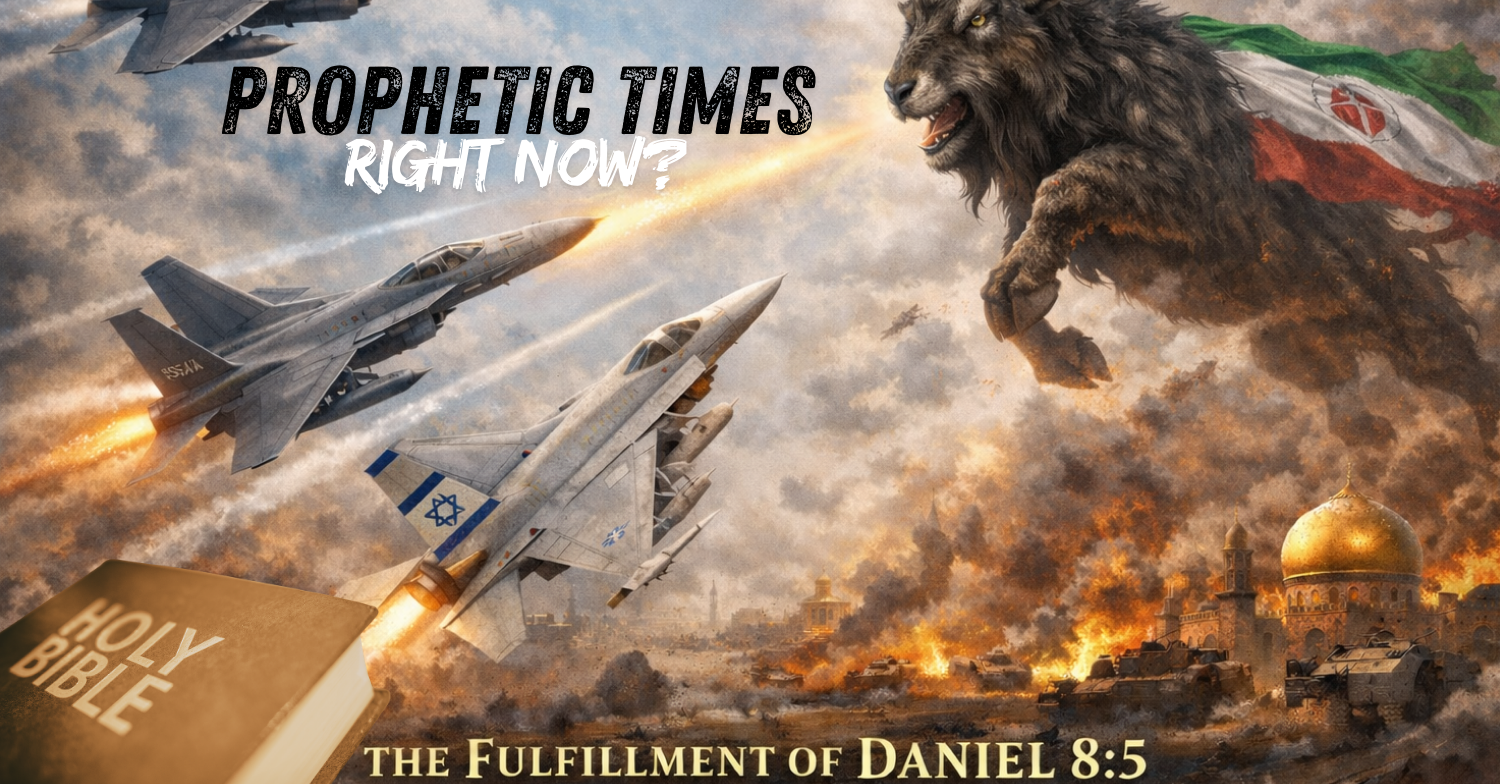
Understanding Daniel's Prophecy: Iran's Role in End Times Events
In a world where headlines seem to echo ancient prophecies, many believers are asking whether current events in the Middle East align with biblical predictions. The book of Daniel, written over 2,500 years ago, contains remarkably specific prophecies about both the first and second coming of Christ - and some of these prophecies may be unfolding before our eyes today.
Daniel's 70 Weeks: A Precise Timeline
What Are Daniel's 70 Weeks?
Daniel 9:24-27 presents one of the most precise prophetic timelines in Scripture. Daniel prophesied that 70 "weeks" (Hebrew: shabua, meaning weeks of years) would encompass God's plan for Israel and the coming of the Messiah. This equals 490 years total, broken into three distinct periods:
- 7 weeks (49 years)
- 62 weeks (434 years)
- 1 final week (7 years)
The Mathematical Precision of Prophecy
Daniel declared that from the command to restore and rebuild Jerusalem until "Messiah the Prince," there would be 69 weeks of years (483 years). In 444 BC, King Artaxerxes issued the decree to rebuild Jerusalem. Counting forward 483 years brings us to 33 AD - the exact year Jesus was crucified.
This mathematical precision demonstrates God's sovereignty over history and validates the accuracy of biblical prophecy.
The Gap Between the 69th and 70th Week
Why Is There a Gap?
After the 69th week, Daniel prophesied that the Messiah would be "cut off" and the temple would be destroyed. Historically, Jesus was crucified in 33 AD, and the Second Temple was destroyed in 70 AD. This creates a gap between the 69th and 70th week of Daniel's prophecy.
The Final Week Points to the End Times
Daniel 9:27 describes the final week: "Then he shall confirm a covenant with many for one week; but in the middle of the week he shall bring an end to sacrifice and offering." This refers to a future seven-year period when the Antichrist will make a covenant with Israel, then break it after three and a half years by stopping temple sacrifices.
Since temple sacrifices require a temple, and the temple was destroyed in 70 AD, this final week must be future - pointing to a time when a Third Temple will exist.
Iran's Prophetic Significance
Ancient Persia and Modern Iran
In biblical prophecy, ancient Persia corresponds to modern-day Iran geographically. Understanding this connection is crucial for interpreting end-times prophecies that mention Persia.
The Pattern of Dual Fulfillment
Biblical prophecy often has dual fulfillment - an initial historical fulfillment that serves as a type and shadow of a future, complete fulfillment. Iran's role in biblical history may be repeating in our time.
During the Second Temple period, Persia initially hindered temple reconstruction but later became the gateway for its rebuilding when King Cyrus issued the decree allowing Jews to return and rebuild. Could modern Iran follow a similar pattern regarding the Third Temple?
Daniel's Vision of the Ram and the Goat
The Ram Represents Persia
In Daniel 8, Daniel sees a vision of a ram with two horns representing the kings of Media and Persia (verse 20). The ram becomes powerful, doing according to its will.
The Goat from the West
Daniel then sees "a male goat came from the west across the surface of the whole earth without touching the ground" (Daniel 8:5). This goat attacks and destroys the ram. The angel interprets this goat as representing Greece (verse 21).
Could This Be Dual Fulfillment?
While this was historically fulfilled when Alexander the Great's Greek empire conquered Persia, the specific details suggest a future fulfillment:
- The goat comes "from the west" - Greece historically established Western culture
- It travels "without touching the ground" - suggesting air power
- The timing connects to end-times events
Could this represent a Western power (led by nations rooted in Greco-Roman culture) attacking Iran in the last days?
The Spiritual Dimension
The Prince of Persia
Daniel 10:12-13 reveals a spiritual battle involving "the prince of the kingdom of Persia" - a demonic principality ruling over that geographical region. This spiritual force opposed God's messenger for 21 days until the archangel Michael intervened.
Spiritual Restraint in the Last Days
Second Thessalonians 2:6-7 speaks of something that "restrains" the revelation of the Antichrist until it is "taken out of the way." Could the Prince of Persia be part of this restraining force that must be removed before end-times events unfold?
Current Events and Prophetic Patterns
Iran as an Obstacle to the Third Temple
Currently, Iran is the primary state-level opponent to Israel rebuilding the Temple. Iran funds Hamas and Hezbollah, calls for Israel's destruction, and would never permit temple reconstruction under current leadership.
The Red Heifer Connection
Just as red heifer ashes were needed to purify the Second Temple, they will be required for the Third Temple. Remarkably, the red heifers for the Second Temple came from a diamond dealer's herd - and today's red heifers also came from a diamond dealer in Texas.
What This Means for Today
Watching and Discerning
While we cannot set dates for Christ's return, we are called to watch for the signs of the times. The convergence of current events with biblical prophecy deserves our attention and prayer.
God's Sovereignty Over History
Whether current events represent the fulfillment of these prophecies or not, they demonstrate God's complete sovereignty over world events. Nothing catches Him by surprise, and His plans will ultimately prevail.
Life Application
As we witness potential prophetic fulfillments unfolding, we must respond with both wisdom and faith. This week, commit to studying biblical prophecy with your Bible open, asking the Holy Spirit for discernment rather than relying solely on news commentary or speculation.
Consider these questions as you process this information:
- How does understanding God's precision in past prophecies strengthen your faith in His promises?
- Are you watching current events through the lens of Scripture, or are you allowing fear and speculation to guide your perspective?
- If Jesus truly is returning soon, how should this reality change your priorities and daily decisions?
- What steps can you take to grow in biblical literacy so you can discern truth from speculation regarding end-times events?
The goal isn't to become obsessed with prophecy charts or date-setting, but to live with the blessed hope of Christ's return while remaining faithful in the work He has given us today. Whether these current events represent the fulfillment of Daniel's prophecies or simply another chapter in world history, our response should be the same: "Even so, come, Lord Jesus."
Love Pastor Steve - www.dgimpact.org