
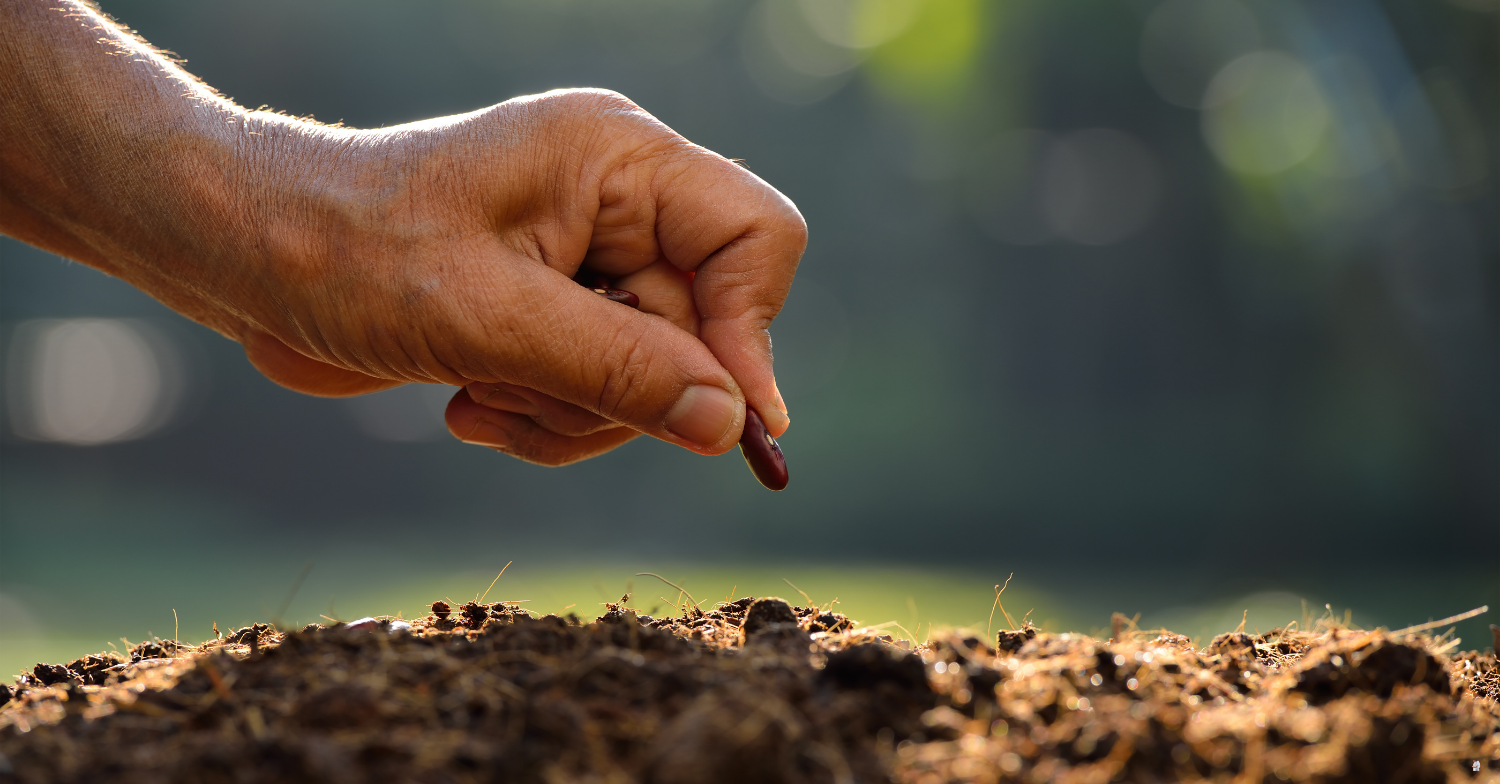
Radical Faith Series: Faith As A Seed
How God Grows Mountain-Moving Faith in the Heart of a Believer
In Matthew 17:14–21, Jesus encounters a desperate father whose son is tormented by a demon. The disciples had already attempted to cast the demon out, but they failed. Confused and frustrated, they asked Jesus privately, “Why could we not cast it out?”
Jesus’ answer was both simple and profound.
He did not say they lacked training, intelligence, or opportunity. Instead, He pointed to the nature of faith itself:
Matthew 17:20 — “Because of your unbelief; for assuredly, I say to you, if you have faith as a mustard seed, you will say to this mountain, ‘Move from here to there,’ and it will move; and nothing will be impossible for you.”
This statement reveals something revolutionary about how the Kingdom of God operates. Faith is not primarily about how much you have—it is about how it works.
Jesus illustrated this truth through the image of a mustard seed: tiny, unimpressive, and easily overlooked. Yet that small seed carries tremendous life within it. When planted in good soil, it grows far beyond its original size.
The same is true of faith.
In the Kingdom of God, faith operates like a seed. It must be received, cultivated, protected, and expressed. When these principles are understood, believers begin to see why Jesus described faith as capable of moving mountains.
Let’s explore three essential truths about radical faith: you already have it, you must cultivate it, and you must use it.
You Already Have It
Many believers spend years praying for faith, asking God to give them more. But Scripture teaches something surprising: God has already given faith to every believer.
Romans 12:3 — “God has dealt to each one a measure of faith.”
Faith is not something that arrives later in the Christian life. It comes as part of the salvation package. When someone is born again, God plants a spiritual seed within them.
James describes this moment as receiving the engrafted Word.
James 1:21 — “Receive with meekness the engrafted word, which is able to save your souls.”
At salvation, something divine happens internally. God deposits His life within the believer, and with that life comes faith.
This aligns with the nature of the fruit of the Spirit.
Galatians 5:22 — “The fruit of the Spirit is love, joy, peace… faith.”
Faith is not simply a tool believers occasionally pick up; it is part of the new nature God gives us. It flows from the life of the Spirit within.
This is why John writes:
1 John 3:9 — “Whoever has been born of God does not sin, for His seed remains in him.”
The word seed is significant. God’s nature, character, and life are planted within those who belong to Him.
Peter reinforces this truth as well:
2 Peter 1:4 — “That through these you may be partakers of the divine nature.”
Faith flows from that divine nature. It is not external equipment we borrow during difficult seasons. It is internal character rooted in the life of God within us.
The Kingdom of God begins inside the believer. Jesus even declared:
“The Kingdom of God is within you.”
This means believers are not waiting for faith to arrive. The seed has already been planted.
Your responsibility is not to obtain faith—it is to activate and grow the faith God has already given.
As one powerful truth summarizes it:
“Faith is not something you must obtain; it is something God has already planted within you.”
Small Seeds Carry Great Potential
When Jesus described faith as a mustard seed, He was not emphasizing weakness. He was highlighting potential.
A mustard seed measures only 1–2 millimeters. It is incredibly small. Yet when planted, it grows into a large plant with strong roots and expansive branches.
The power of the seed is not in its size—it is in the life inside it.
The Kingdom of God operates according to this same principle.
From the very beginning of Scripture, God designed creation around the concept of seeds. Genesis repeatedly describes life producing “seed according to its kind.”
Seeds contain the blueprint for growth. What begins small contains the potential to become something far greater.
Faith works exactly the same way.
When God plants faith within a believer, it may begin quietly. It may feel small or insignificant. But inside that seed is divine potential waiting to grow.
This truth should completely change how believers view their spiritual lives.
You do not need extraordinary faith to begin obeying God. You simply need genuine faith planted in the right soil.
Jesus never said you needed mountain-sized faith to move mountains. Instead, He said mustard-seed faith could accomplish that.
The difference is not quantity—it is authenticity and growth.
Small acts of obedience often lead to extraordinary outcomes. A quiet prayer can open the door to a miracle. A moment of trust can transform an entire situation.
The enemy often tries to convince believers that their faith is too small to matter. If he can make you underestimate your faith, you may never plant it.
But God sees the potential within what He planted in you.
Never underestimate the power of a small beginning.
As this truth reminds us:
“Never underestimate a small seed when it carries the life of God.”
Cultivate the Soil of Your Heart
Seeds thrive only in healthy soil.
Even the strongest seed cannot grow properly in hardened ground. That is why Scripture emphasizes the condition of the heart.
The prophet Hosea gave this instruction:
Hosea 10:12 — “Sow to yourselves in righteousness, reap in mercy; break up your fallow ground: for it is time to seek the Lord.”
Fallow ground is soil that has become hard and neglected. Seeds may fall onto it, but they struggle to take root.
The same condition can develop in our spiritual lives.
Life’s challenges can harden the heart. Bitterness, offense, sin, disappointment, distractions, and spiritual apathy can slowly compact the soil of the soul.
When that happens, faith struggles to grow.
The solution is intentional cultivation.
Farmers do not wait for the soil to prepare itself. They break up the ground, remove obstacles, and prepare it to receive seed.
Spiritually, believers must do the same.
The apostle Paul describes this process clearly:
Romans 12:1–2 — “Be transformed by the renewing of your mind.”
When believers spend time in God’s presence, meditate on His Word, and surrender their lives to His guidance, the soil of the heart becomes soft and receptive again.
Faith begins to grow in that environment.
Cultivation is not a one-time event—it is a daily practice.
Faith grows internally before it manifests externally.
Jesus described the inner life of the Spirit this way:
John 7:38 — “Out of his belly shall flow rivers of living water.”
Faith begins in the spirit and gradually saturates the heart, mind, and actions of a believer.
But growth requires attention.
If the soil is ignored, stagnation occurs. If the soil is nurtured, strength develops.
This is why the principle is so important:
“Faith grows best in hearts that are intentionally cultivated.”
Protect the Seed From Weeds
Even healthy soil can become overcrowded.
Jesus warned about this in the parable of the sower.
Matthew 13:22 — “The cares of this world and the deceitfulness of riches choke the word.”
Weeds compete with healthy plants for nutrients, water, and sunlight. If they grow unchecked, they slowly drain life from the seed.
The same principle applies spiritually.
Distractions, worries, unhealthy influences, and misplaced priorities can gradually choke the growth of faith.
Not everything deserves space in your spiritual soil.
The enemy understands the importance of this stage. If he cannot stop the seed from being planted, he will try to interfere during cultivation.
His strategy is simple: distraction.
Constant busyness, emotional overload, worldly pressures, and endless noise can weaken spiritual focus. When believers lose focus on God’s Word and presence, faith struggles to flourish.
Guarding the heart requires intentional choices.
Believers must evaluate what they listen to, watch, dwell on, and prioritize. Every influence either nourishes faith or weakens it.
Removing weeds early is essential.
Just as a gardener pulls weeds before they spread, believers must quickly address attitudes or habits that threaten spiritual growth.
Faith thrives in an environment where spiritual focus is protected.
This truth is worth remembering:
“Not everything deserves space in the soil of your heart.”
Use Your Faith
Faith is not meant to remain dormant.
It must be expressed.
Jesus revealed this clearly when He taught about speaking to mountains.
Mark 11:23 — “Whoever says to this mountain, ‘Be removed and be cast into the sea,’ and does not doubt in his heart… he will have whatever he says.”
Notice the emphasis on speaking.
Faith begins in the heart but moves through the mouth.
The Bible consistently highlights the power of words.
Proverbs 18:21 — “Death and life are in the power of the tongue.”
Words are not merely sounds. They are carriers of belief. What we repeatedly say reinforces what we truly believe.
Throughout Scripture, God often changes a person’s future by changing what they speak.
Abram became Abraham. His new name meant “father of many nations,” long before the promise was fulfilled. Every time he spoke his name, he was declaring God’s promise.
Faith and speech work together.
Paul described this connection clearly:
2 Corinthians 4:13 — “I believed; therefore I spoke.”
Faith-filled declarations align the heart with God’s promises.
This does not mean denying reality. Instead, it means declaring a greater truth over it.
Mountains still exist today—fear, sickness, financial struggles, broken relationships, and impossible situations.
Jesus’ instruction remains the same: speak to the mountain.
Silence often sustains fear. Declaration releases authority.
When believers speak God’s Word, they reinforce their faith and release truth into the atmosphere.
Romans reminds us where faith comes from:
Romans 10:17 — “Faith comes by hearing, and hearing by the word of God.”
When you speak the Word aloud, you strengthen your own faith as well.
Faith anticipates results before evidence appears.
Hebrews 11:1 — “Now faith is the substance of things hoped for, the evidence of things not seen.”
Faith sees with spiritual vision before physical reality changes.
This is why radical faith follows a simple but powerful pattern:
Speak. Align. Declare. Expect.
And remember this truth:
“Faith in the heart becomes powerful when it finds its voice.”
Final Thoughts: The Power of a Planted Seed
Jesus could have used many examples to describe faith, but He chose a seed.
Seeds represent potential, growth, and transformation.
The seed of faith God planted within you contains the possibility of extraordinary outcomes. But like every seed, it must be nurtured.
Faith must be recognized, cultivated, protected, and expressed.
When these principles come together, the small seed grows into something strong enough to move mountains.
The power of radical faith is not found in human ability. It is found in the divine life God has already placed inside every believer.
The seed is already there.
Now it’s time to plant it, grow it, and use it.